The Optical
Stack
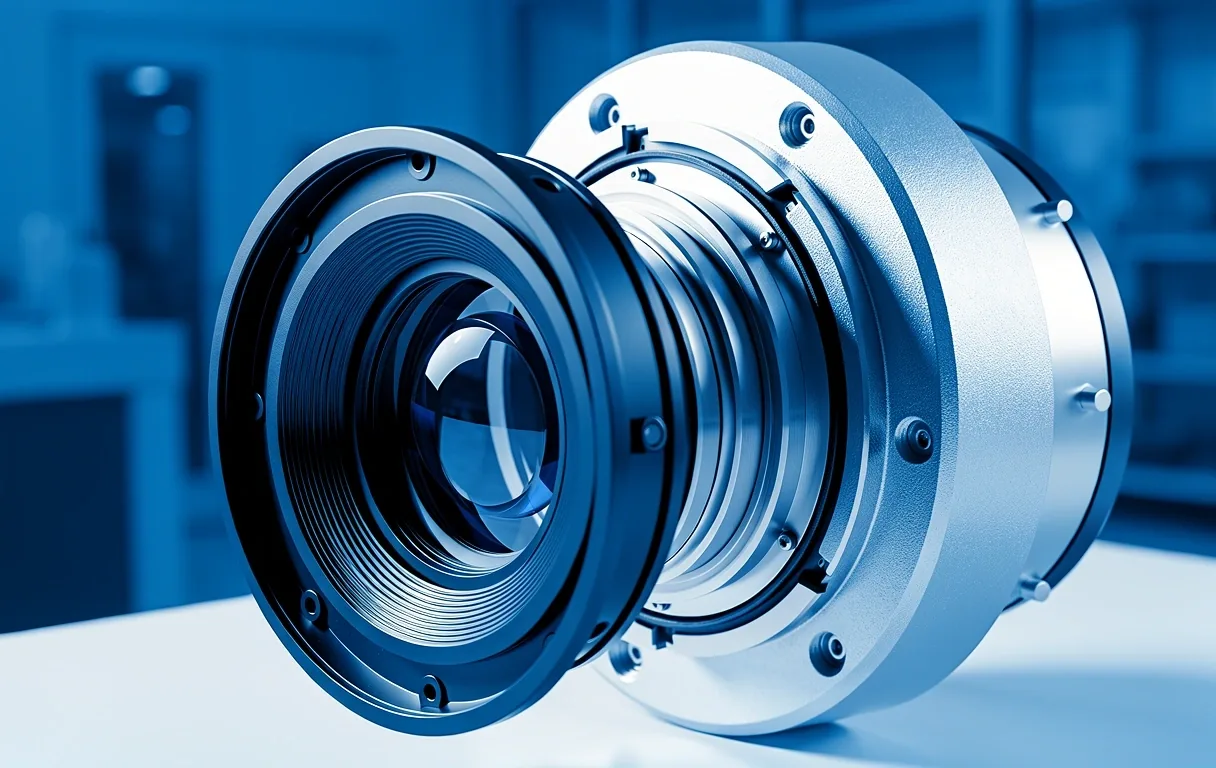
High-precision inspection requires more than software. We engineer the physical point of capture, pairing custom optics with high-frequency image processors to eliminate environmental interference before the first pixel is even analyzed.
Processing Pipeline
Sub-millisecond decision logic
Photon Capture
Synchronization of industrial strobe units with global shutter CMOS sensors to freeze motion at line speeds up to 120m/min.
Noise Filtration
Real-time application of Gaussian filters and thresholding to isolate valid signal from factory floor vibration and lighting fluctuations.
Feature Extraction
Neural networks identify geometric anomalies, fractures, or missing components against a pre-trained golden template.
Decision Logic
Rejection signals are dispatched to PLCs via EtherNet/IP or PROFINET with deterministic latency for immediate line sorting.
Accuracy Through
Field Correction
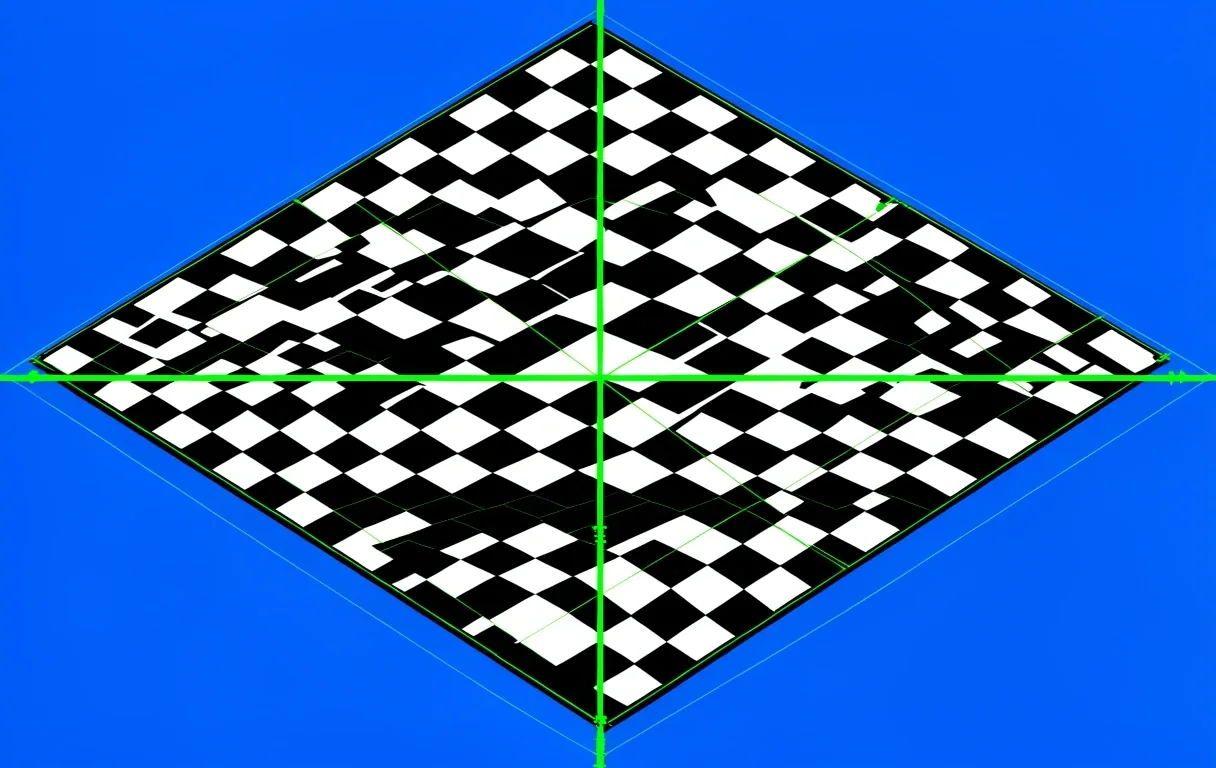
In industrial environments, lens distortion is the primary cause of false negatives in quality control. Digitlit Vision Systems employs a rigorous Lens Distortion Calibration protocol for every deployment.
Methodology
Radial & Tangential Correction
Every pixel across the entire field of view is mathematically re-mapped to ensure uniform density, vital for accurate measurement of automotive part tolerances.
Benefit
Zero-Skew Dimensional Analysis
Eliminates peripheral warping, allowing for high-angle inspections where linear space is restricted.
SYSTEM_VERIFIED // FIELD_DENSITY_NOMINAL
Surface Profiling
Detection of fractures under 0.5mm across metallic surfaces.
Assembly Count
Real-time object counting and orientation validation for packaging lines.
Infrared Support
Extended spectrum support for thermal anomaly detection in high-voltage components.
SDK Access
Full API documentation for factory-wide MES and ERP data integration.
Technical
Support Logs
The system is designed for high-speed rejection lines with latency below 5ms. We support sustained processing at 150 FPS at Full HD resolution, though mechanical line speed often acts as the primary constraint rather than algorithm cycle time.
We support standard GigE Vision and USB3 Vision protocols. Provided your existing hardware meets the required spectral sensitivity and resolution for the defect detection threshold, integration is seamless via our transport-neutral layer.
Yes. Our feature extraction models are agnostic to pixel frequency. Thermal imaging integration is typically deployed for plastic extrusion and electrical component testing to monitor heat dissipation uniformity.
Inquire Regarding Sensor Calibration
Direct technical consultation for Alberta & BC manufacturing sectors.